If you've found yourself on this page, there's a good chance you're researching me before deciding whether to work with me, partner with one of my companies, or simply learn more about who I am.
I think that's exactly what you should be doing.
The internet makes it incredibly easy for anyone to make claims about who they are, what they've achieved and what they've built. I believe the best way to judge somebody is to understand their story not just the highlights, but the setbacks, lessons and decisions that shaped them.
This is mine.
Growing Up
I grew up in Lancing, a small town on the south coast of England.
From the outside, I had a pretty normal childhood. I did well at school, played football, got decent exam results and had a supportive family. My dad was a self-employed electrician and my mum was a hairdresser before becoming a stay-at-home mum.
Although nobody in my family built large businesses, my dad unknowingly gave me one of the biggest motivations I've ever had.
Growing up, I'd often go to work with him. We'd spend cold mornings on building sites or working on expensive houses.
I remember standing on one particularly cold, wet building site and thinking that I knew this wasn't what I wanted to do with my life.
At the same time, I'd see some of the houses my dad worked in and think about the kind of life I wanted to create for myself.
I didn't know exactly how I was going to do it.
I just knew I'd probably have to build something of my own.
My parents never pushed me towards entrepreneurship, but they never discouraged me either. They gave me the freedom to explore the things I was interested in and supported me along the way.
Looking back, that freedom made a huge difference.
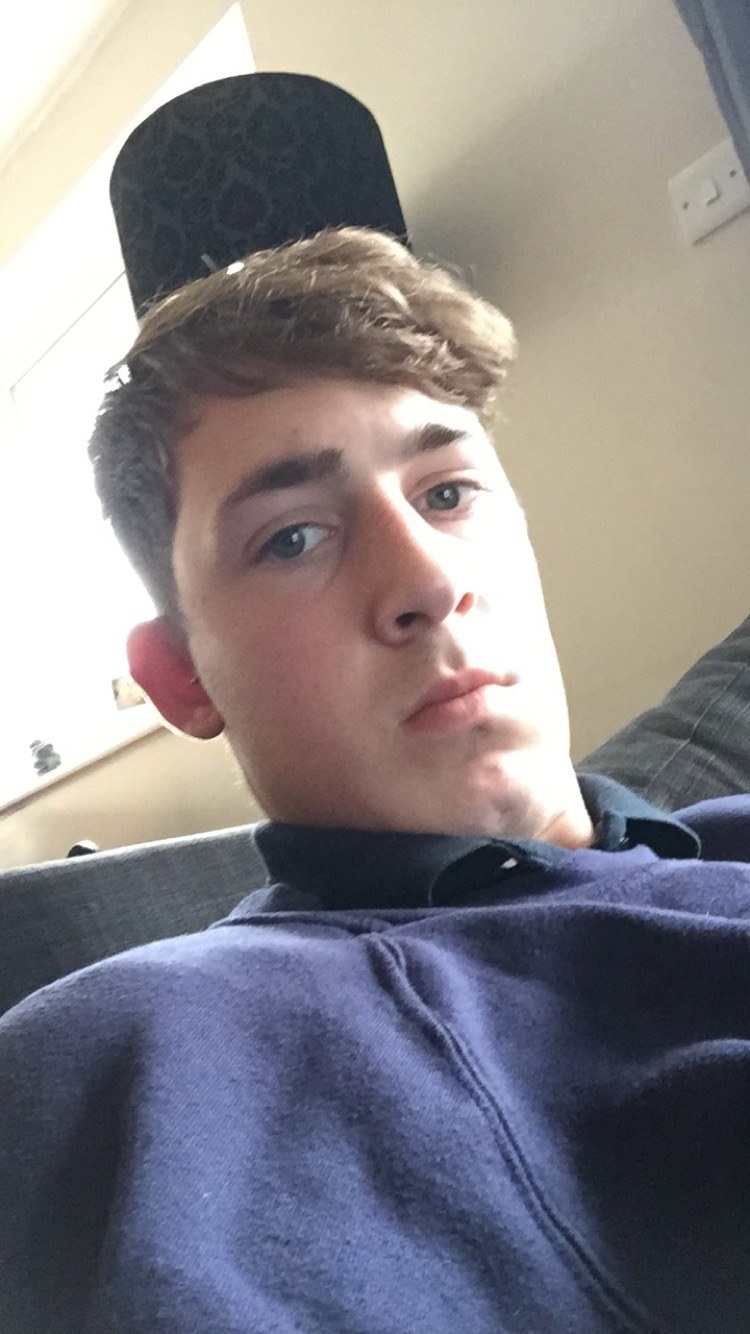
An early photograph
Learning to Build
Long before I discovered trading, I was fascinated by building things.
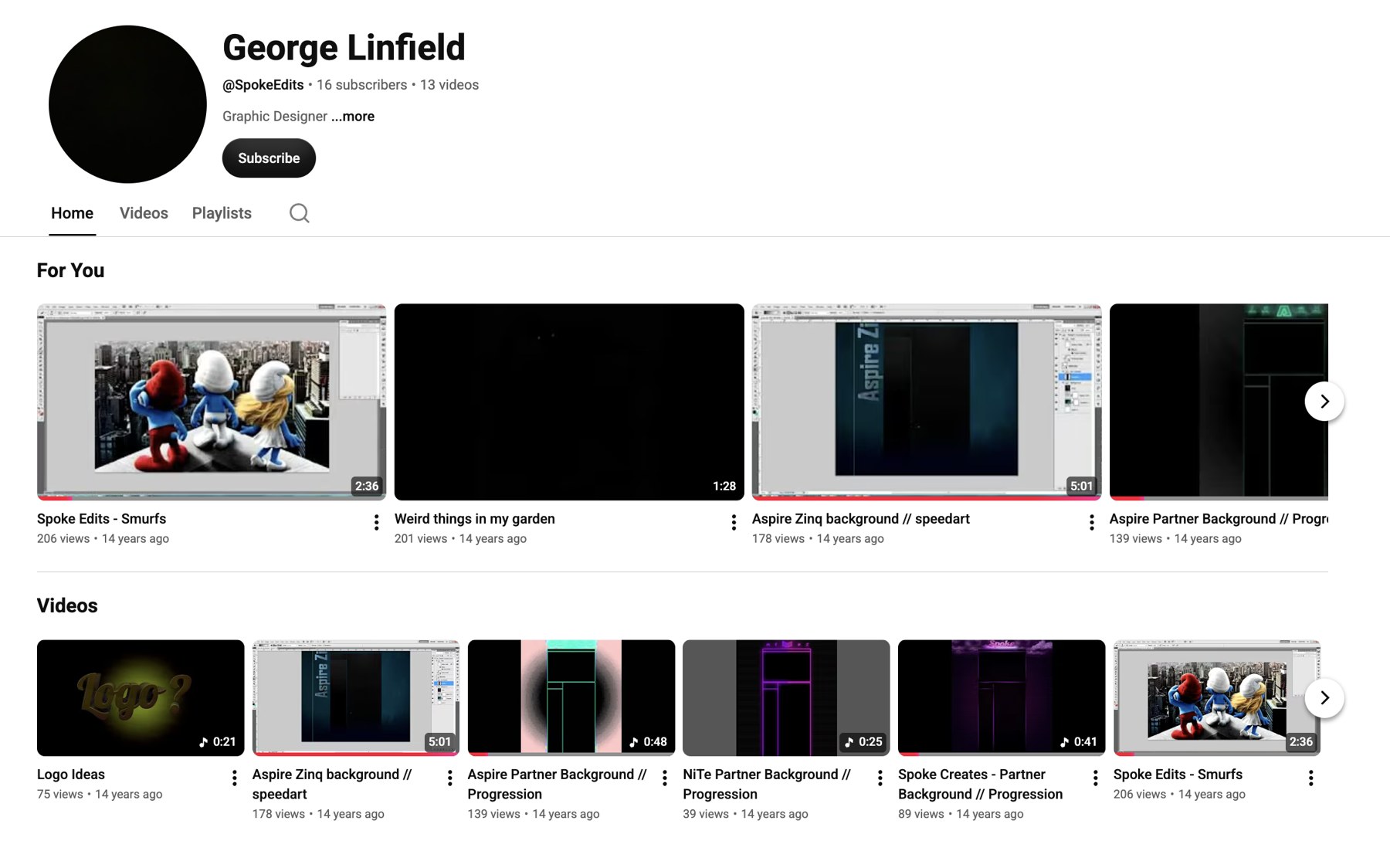
At around 12 or 13 years old, I taught myself graphic design and started creating artwork for Call of Duty YouTube channels.
They weren't huge projects. I might make around £50 for a design, sometimes less.
But for the first time in my life, I'd made money online.
Someone I'd never met could pay me over the internet for something I'd created from my bedroom.
That completely changed the way I thought.
My old graphic design channel
I became obsessed with trying things.
I sold phone cases and all sorts of random products on eBay.
When Yeezy trainers started becoming popular, I began buying and reselling those.
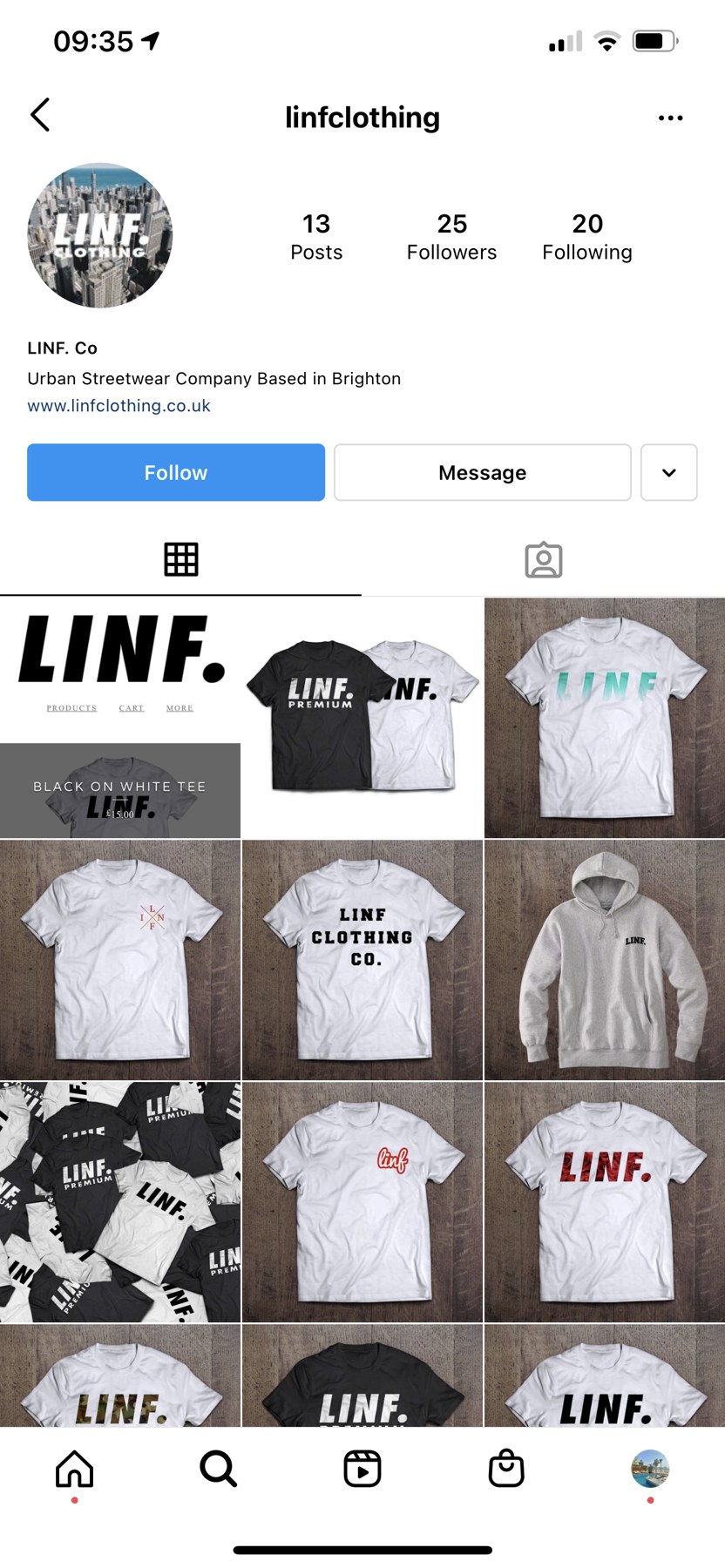
Eventually I tried launching my own clothing brand, Linf Clothing.
That one probably taught me one of my first proper business lessons.
I'd borrowed £200 from my auntie and uncle to produce my first batch of clothing. I managed to get the product made, but then discovered the fairly obvious problem that nobody tells you when you're a teenager starting a business:
Having a product doesn't mean anybody is going to buy it.
I had virtually no money left to market it and nowhere near enough experience to make it work.
The business went nowhere.
Linf Clothing
None of these early ventures made me significant amounts of money. Reselling probably made me a few thousand pounds at most.
But that wasn't really the point.
I loved the process.
The branding.
Building websites.
Marketing.
Finding products.
Figuring out operations.
Creating something that hadn't existed before.
The first significant thing I bought with money I'd earned myself was a MacBook.
At the time, I still had absolutely no idea what my career was going to look like.
I actually thought I might become a graphic designer and went to college to study it, only to realise that I hated the corporate side of something I'd previously loved doing creatively.
One thing, however, was becoming increasingly clear.
Whatever I eventually did, I wanted to do it for myself.
The Job That Changed Everything
Eventually, like most people finishing school and college, I was put in the position where I needed to get a "proper job."
So in 2015, I started working as a track marshal at TeamSport Karting in Brighton.
I'd be out on the track flagging drivers, often sitting around in a cold, dark warehouse watching the clock.
There was nothing particularly wrong with the company or the job.
It just wasn't for me.
I was taking home around £800 a month and every shift reinforced something I'd already believed for years:
I did not want to spend my life working a normal job.
I just hadn't figured out the alternative yet.
That changed in February 2016.
22nd February 2016
Discovering Trading
On 22nd February 2016, an old school friend called Ross posted a tweet about trading.
Ross’s tweet · 22 February 2016
I was curious, so I messaged him.
There wasn't some huge life-changing conversation.
Trading was simply another thing I'd discovered and wanted to try and by that point I was pretty used to finding something new and immediately throwing myself into it.
Ross pointed me towards some free resources online and told me that if I wanted to learn, I needed to study.
So that's exactly what I did.
Like most beginners, I started with websites such as BabyPips.
I consumed everything I could find.
Eventually I moved beyond the basic online education and became fascinated with books, interviews, documentaries and forums discussing people such as Paul Tudor Jones and George Soros.
I had absolutely no financial background.
I was 17 years old.
Eventually, I opened my first brokerage account with somewhere around £300.
And I blew it.
Learning How Not to Trade
Looking back, the mistakes I made were the same ones I now see new traders making all the time.
I gambled.
I traded emotionally.
I relied heavily on discretion.
I had no measurable edge.
I didn't care enough about data.
And I thought becoming a good trader meant becoming better at predicting what the market was going to do next.
It didn't.
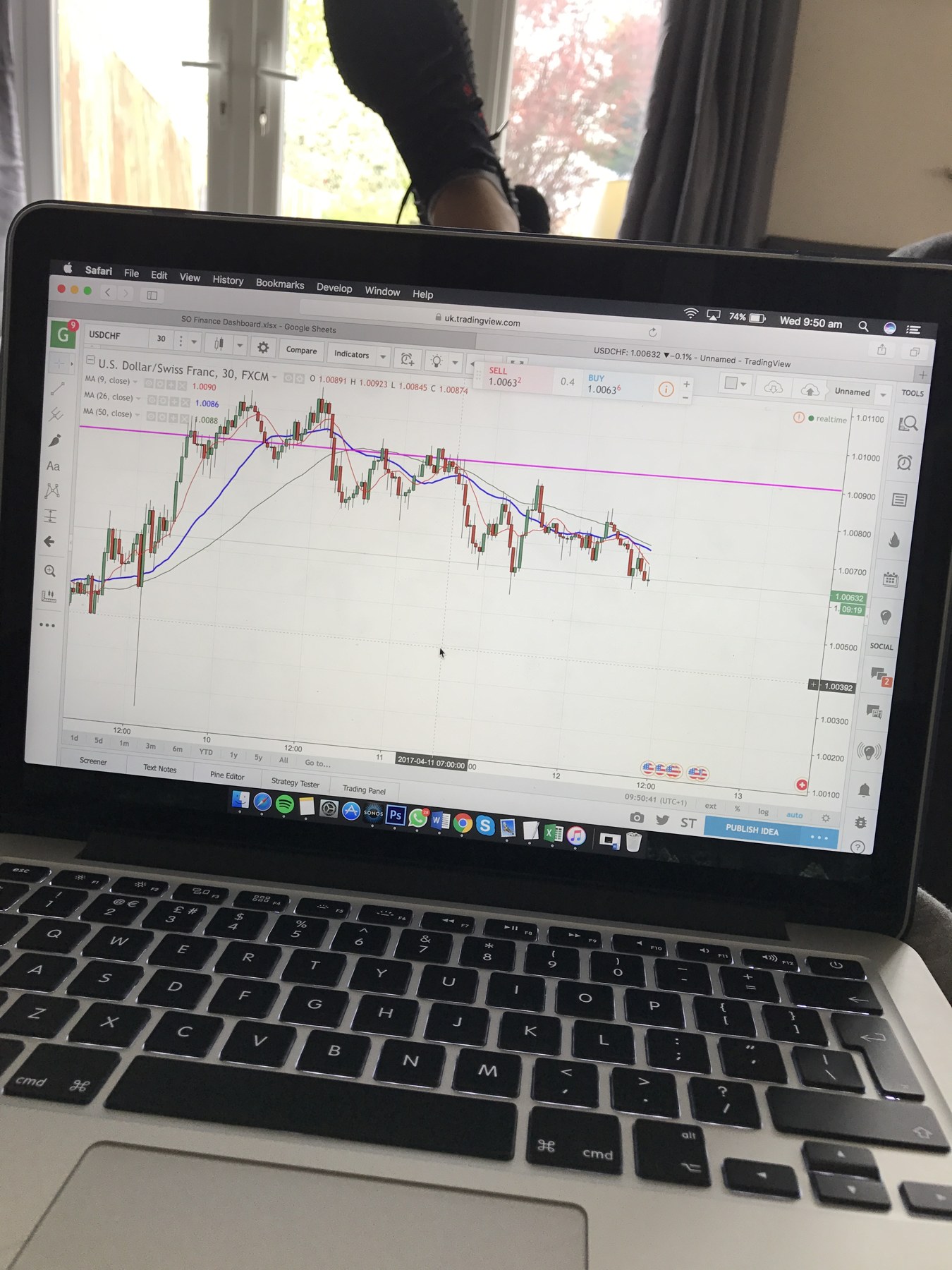
An early chart on my laptop
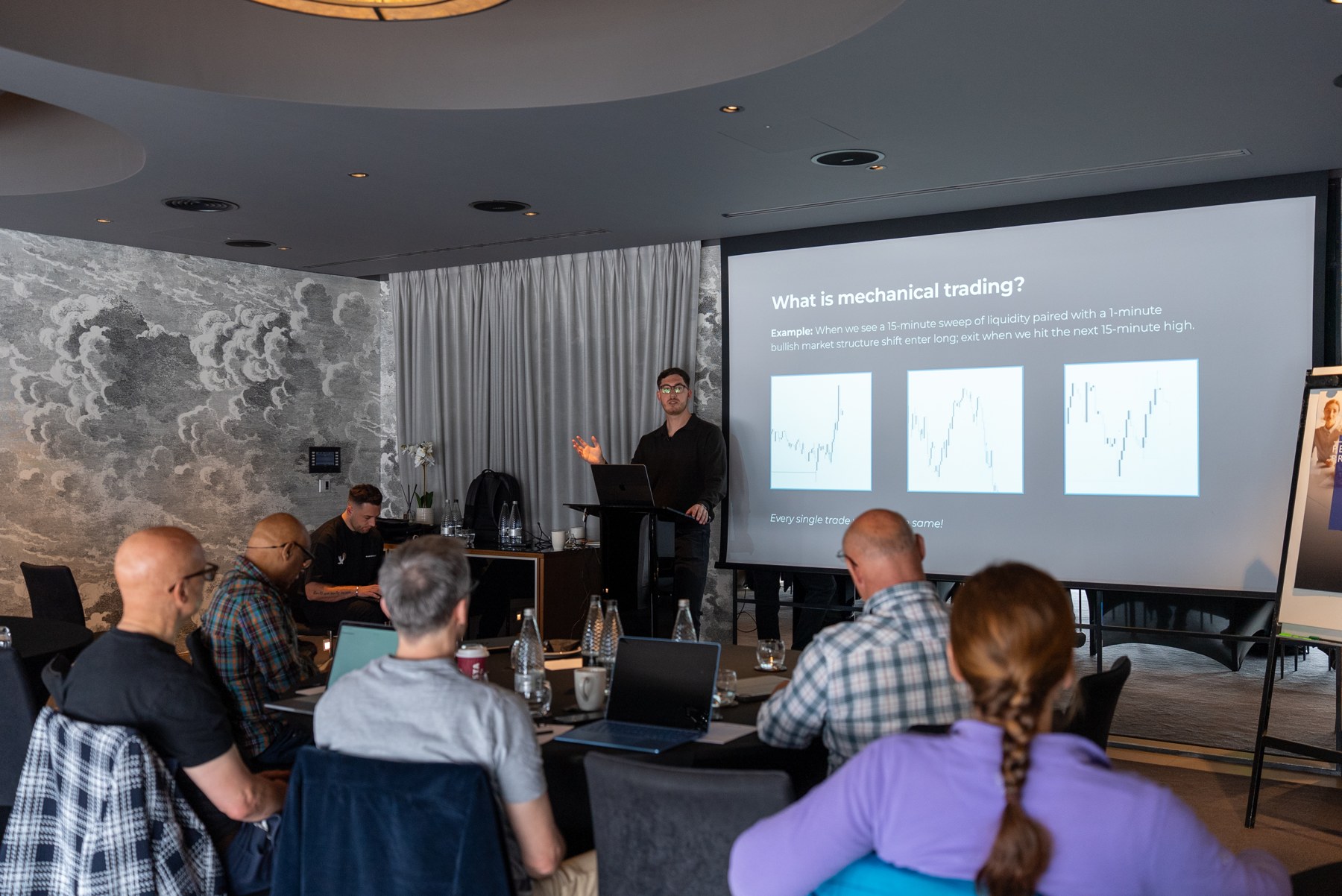
The breakthrough came when I started learning about mechanical trading.
The idea immediately made sense to me.
Rather than sitting in front of a chart trying to form an opinion about what might happen next, I could define exactly what needed to happen before I entered a trade.
Then I could test those rules against historical data and find out whether I actually had an edge.
If the conditions were there, I traded.
If they weren't, I didn't.
That philosophy completely changed the way I viewed the markets.
Around eight months after discovering trading, things began to come together and I started making money consistently.
Within roughly my first year, I was already earning more from trading than I had been earning from my job.
More importantly, I'd found something I genuinely loved.
I knew pretty early on that trading could become my career.
I just had no idea where it was eventually going to take me.
When People Started Asking Questions
As my trading improved, people around me naturally became curious.
Friends.
Acquaintances.
People from my local area.
By 2018, at 20 years old, I was driving an Audi R8.
The Audi R8 chapter
Unsurprisingly, that tended to generate one particular question:
"What do you actually do?"
The answer was trading.
And because I genuinely loved talking about it, I started helping people.
Initially, there was no grand plan to build a trading company.
I wasn't charging people to learn.
I'd simply talk to people about trading, explain what I was doing and help them understand how they could get started themselves.
As more people became interested, that informal group started growing.
Eventually, I realised just how much demand there was.
And that's where SOFX began.
2018
Building SOFX
In 2018, together with three business partners, I officially launched SOFX.
What started in the bedroom of my parents' house quickly became something far bigger than any of us imagined.
It's worth explaining what SOFX actually was, because it's sometimes described today as a trading education company, when that doesn't really tell the full story.
Education was part of what we did. We helped people understand the basics of trading and had experienced traders available to support them, but the core of the service was trade signals.
We had a team of proven traders analysing the markets and sharing the trades they were taking with our clients, who could then choose to follow those trades through their own brokerage accounts.
As the client base grew, we hired more experienced traders to help us provide that service and support the thousands of people who were joining the community.
And it grew incredibly quickly.
We moved to Southampton.
For a while, we worked from Starbucks.
Then we opened our first small office and made our first hires.
Inside the SOFX office
Before long, we'd completely outgrown it.
We moved into premises around 15 times the size, built a full trading floor and continued expanding the team.
The SOFX trading floor
We regularly had clients visit the trading floor, hosted in-person events and built a genuine community around what we were doing.
Within just a few years, SOFX had grown from a handful of clients to more than 18,000 traders across Europe.
At our peak, we had around 140 members of staff, with around 40 people working from our Southampton office and more than 100 working remotely.
COVID accelerated that growth even further. With millions of people suddenly at home and more people exploring ways of earning money online, the business grew exponentially.
Looking back, SOFX was an incredible chapter of my life.
I'm proud of the scale we reached, but I'm probably even more proud of the culture we built around it.
We were a young team building something together, and we genuinely enjoyed it.
We took the team to Marbella.
We went to Goodwood.
We celebrated milestones together.
Travelling together
We created well-paid careers for people and built relationships that have lasted far beyond the company itself.
One of my original business partners still works alongside me today, as do a number of people who first came into my life through SOFX.
Many former SOFX clients also went on to work with me again through WeTrade.
That means a lot to me, particularly because of how the SOFX story eventually ended.
2020–2021
The Hardest Chapter
By 2020, SOFX had become a significant business in the UK retail trading space.
Then something happened that none of us expected.
SOFX appeared on the Financial Conduct Authority's warning list.
It came as a huge shock.
Up until that point, we genuinely believed we were operating above board.
We hadn't simply ignored legal and regulatory considerations while building the company. Throughout SOFX's growth, we'd employed lawyers and sought professional advice about the business and how we operated.
We were also working directly with regulated brokerage firms, and our understanding was that the model we were operating was permissible.
Unfortunately, with hindsight, some of the legal and compliance advice we'd relied upon wasn't good enough.
The moment we became aware of the FCA warning, we didn't try to hide from it or simply continue operating regardless.
We stopped and contacted the FCA ourselves to understand exactly what the issue was.
What followed was a long and complicated regulatory and legal process that ultimately centred on one fundamental part of SOFX's business model.
We didn't primarily make our money by charging clients for education or signals.
Instead, SOFX generated much of its revenue through affiliate arrangements with regulated CFD brokers.
When a client wanted to trade, we could introduce them to one of those brokers, and the broker would pay SOFX a commission for that introduction.
Client money never came to us.
We never held or controlled client trading funds.
Clients opened and funded their own accounts directly with the brokers themselves.
The regulatory issue was the introduction.
The FCA's position was that referring clients to CFD trading accounts constituted regulated activity and therefore required the appropriate FCA authorisation.
That created a fundamental problem for SOFX because the activity in question wasn't some small part of the business.
It sat at the centre of how the company generated its revenue.
We explored every realistic option available to us.
We brought in people to look at obtaining FCA authorisation.
We continued taking legal advice.
But becoming authorised wasn't something that could happen overnight. We were looking at a process that could potentially take years, cost a substantial amount of money and still offered no guarantee that authorisation would ultimately be granted.
Meanwhile, the business had effectively been brought to a standstill.
Staff moved on.
Revenue disappeared.
The company we'd spent years building began unwinding incredibly quickly.
By the time there was any realistic possibility of moving forward, we would essentially have been rebuilding SOFX from zero.
Eventually, we made the decision not to.
What Actually Happened to SOFX?
I want to address this directly because I know SOFX is one of the things people sometimes find when researching me online.
Over the years, I've seen the story reduced to versions of:
"SOFX was a scam that got shut down by the FCA."
That isn't what happened.
The FCA issue concerned SOFX carrying out regulated activity without the required authorisation, specifically in connection with the introduction of clients to CFD trading accounts.
It wasn't a case of SOFX taking possession of client trading funds or clients depositing their trading capital with us.
Client funds remained in accounts held directly with the relevant brokers.
Nor was this a criminal fraud case against me.
It was a regulatory dispute about whether part of the business model required FCA authorisation.
That's an important distinction.
It doesn't mean we got everything right.
We didn't.
As the people running the business, ultimately the responsibility for ensuring that SOFX complied with every regulation sat with us, regardless of the advice we'd received from lawyers, brokers or anyone else.
That's something I've carried forward into every business I've built since.
But there's an equally important distinction between making regulatory mistakes while building a rapidly growing company and deliberately setting out to scam people.
SOFX was a real business.
It had thousands of real clients, a large team, experienced traders, physical offices, a trading floor, events and a community that many people remained part of for years.
I'm incredibly proud of a lot of what we built there.
I'm also comfortable acknowledging what we got wrong.
Losing It
The entire period is still something of a blur to me.
At the time, I almost felt numb to it.
I'd gone from being in my early twenties and running a company with around 140 people and more than 18,000 clients to watching something we'd spent years building disappear.
It wasn't until afterwards that it really hit me.
I lost the business.
I lost friendships.
I lost the respect of some people who only ever heard one version of what had happened.
And for a while, I lost a big part of my identity.
It was hard being in the same places surrounded by memories of everything that had happened, and that period ultimately contributed to my decision to leave the UK and start a new chapter of my life.
Looking back now, however, I'm glad we decided not to rebuild SOFX.
The retail trading and signals industry has changed enormously since then, and much of what I see today isn't an industry I have any desire to be part of.
SOFX taught me a huge amount about building a company, creating a great product, hiring talented people, developing a strong culture and looking after a large client base.
It also taught me a painful lesson about the importance of regulation, compliance and never relying solely on other people's assurances that what you're doing is okay.
Most importantly, it gave me the opportunity to decide what I wanted to build next.
And for quite a while, the answer was:
Nothing.
Starting Again
After SOFX ended, I stepped away from teaching for quite some time.
For a while, I genuinely wasn't sure whether I ever wanted to teach trading again.
So I went back to what I'd always known.
Trading.
I focused on myself and spent a good amount of time simply trading my own account.
I'd wake up, trade the London Open for an hour or two and then...
That was basically it.
By late morning, I'd often find myself sitting there wondering what I was supposed to do with the rest of the day.
And eventually I realised something.
Trading was never the only thing I loved.
I loved building.
I loved creating businesses.
I loved working with good people.
And despite everything that had happened, I still loved helping traders.
I missed seeing somebody finally understand something they'd been struggling with for years.
I missed watching people become profitable.
I missed creating something bigger than myself.
But if I was ever going to return to the education industry, I wanted to do it differently.
That realisation became the foundation of WeTrade.
Unlike SOFX, this time the business would be built around education and mentorship.
And the philosophy behind it came directly from my own experience as a trader.
I had become convinced that the trading education industry focused far too heavily on concepts.
Indicators.
Patterns.
Analysis.
Predictions.
Discretionary strategies.
Traders were learning more and more information without ever answering the most important question:
Do I actually have an edge?
That's what I wanted WeTrade to solve.
Instead of giving somebody another collection of concepts and sending them away to figure everything out themselves, we focus on providing traders with mechanical strategies backed by data and clear rules.
A proven edge.
Clear mechanical rules.
Data.
Consistency.
Then we combine that with one-to-one mentorship and accountability to help traders actually execute those systems correctly.
Because having a strategy is only half of the equation.
You still need to be able to follow it.
Teaching mechanical trading
Since launching, WeTrade has now worked with almost 1,600 traders.
We've seen hundreds of success stories.
Some have gone on to build full-time trading careers.
Others have secured significant amounts of funding through proprietary trading firms.
And many have simply found consistency after spending years jumping between strategies, indicators and different approaches without ever having a genuine edge.
One story that means a lot to me is George Cook.
George originally came to us while working in hospitality.
He learned to trade, eventually transitioned into trading full-time and then approached us because he wanted to help other people do the same.
Today, he's been working alongside us for years as one of our full-time coaches, helping the next generation of WeTrade clients achieve their own results.
That's probably one of my favourite success stories.
Not because it's the biggest financial result we've ever seen.
But because it came full circle.
Someone came into our community looking to change his own life and ended up becoming part of the team helping us change other people's.
As WeTrade grew, another problem became increasingly difficult to ignore.
Prop firms had completely changed the trading landscape.
For traders without huge amounts of personal capital, they created an opportunity that simply hadn't existed when I started.
A talented trader could prove their ability and potentially gain access to significant trading capital without needing hundreds of thousands of pounds sitting in their own bank account.
Our clients were having huge success with them.
But we were also seeing the other side of the industry.
Rules changing.
Trading conditions changing.
Payouts being delayed or denied.
Firms disappearing.
Traders doing everything correctly and still finding themselves caught out by something outside their control.
We wanted somewhere our clients could trade that we knew we could trust.
Initially, that was the motivation behind PropHouse.
We could have partnered with another prop firm, but ultimately that didn't solve the problem.
A partnership still meant trusting somebody else's business behind closed doors.
We wanted control.
So we built our own.
PropHouse started as a way of providing our own traders with a trusted route to capital allocation.
As it developed, we realised the opportunity was much bigger.
We could build the kind of prop firm we'd want to use ourselves.
Fair rules.
Fast, reliable payouts.
Transparency.
And an environment designed to reward proper, disciplined trading.
Our ambition is simple:
To build the house of prop trading.
Life Today
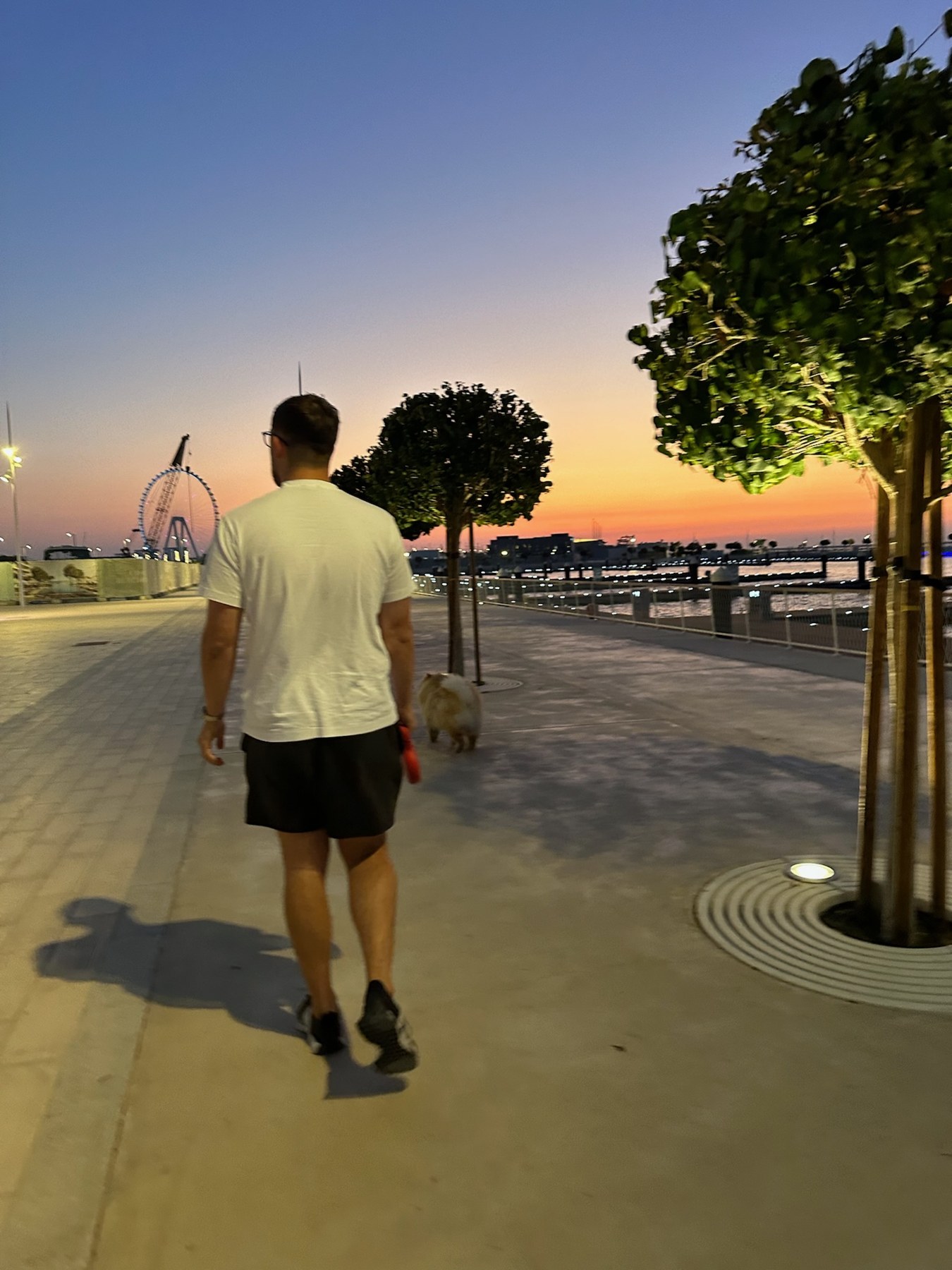
Today, I live in Dubai.
Part of the move was about getting a fresh start after everything that had happened in the UK.
And, if I'm being completely transparent, part of it was the same reason plenty of other entrepreneurs move here:
Sunshine, lifestyle and tax-free income.
Today, most of my mornings still revolve around the same thing I discovered at 17.
Trading.
I wake up.
Walk Ted, my Chow Chow, who's been with me since December 2019.
I'm usually on the charts by around 6:30am UK time.
I focus predominantly on the London Open and normally trade for somewhere between one and two hours.
Then I'm done.
The rest of my day is spent working with our teams, building the businesses and coaching traders.
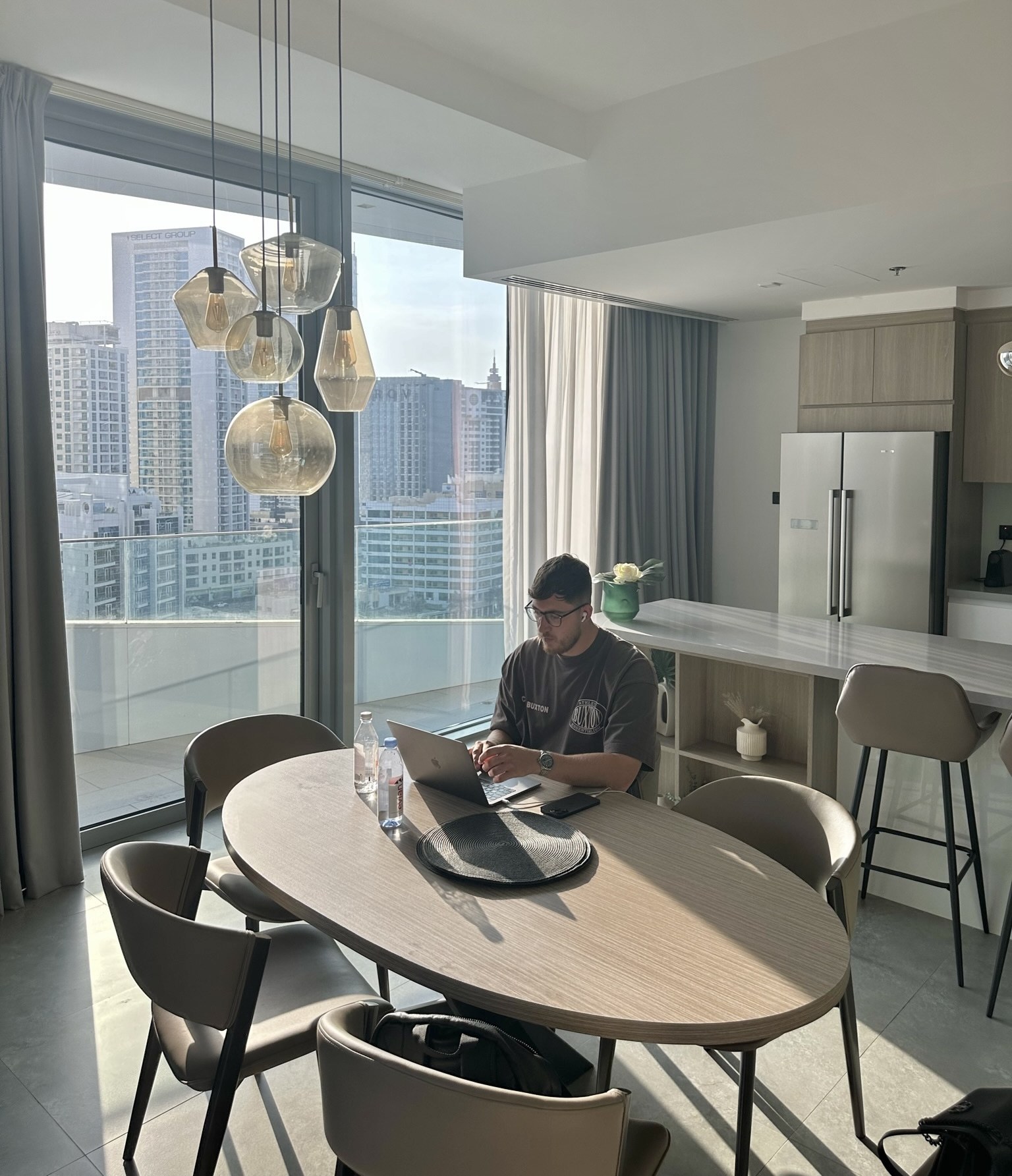
Working from Dubai
Outside of work, I play golf, travel, eat probably too much good food and spend time with friends.
It's funny to think that after everything that's changed over the last decade, my actual trading routine has become incredibly boring.
But that's intentional.
Because one of the biggest things trading has taught me is that the work itself doesn't need to be exciting to create an exciting life.
What I Believe
Over the last decade I've experienced more than I ever expected when I first sent Ross that message in 2016.
I've built companies.
I've lost companies.
I've made money.
I've lost money.
I've hired hundreds of people.
I've worked with thousands of traders.
I've made mistakes.
I've had to start again.
And I've learned an enormous amount along the way.
But a few principles have remained constant.
I believe the only way to become genuinely profitable in the markets over the long term is to have an edge.
I believe that edge should be measurable.
I believe traders need clear mechanical rules they can execute consistently rather than constantly trying to predict what happens next.
I believe simple beats unnecessarily complicated.
I believe great businesses solve genuine problems.
I believe good people are the foundation of great companies.
I believe reputation is earned through what you actually do, not what you say about yourself.
And I believe success means very little if you can't use it to create a great life for yourself and positively impact the people around you.
Trading is actually pretty boring when it's done properly.
Following the same rules.
Collecting data.
Managing risk.
Doing the same thing again tomorrow.
But I've come to love that.
Because it's the boring work that allows us to live exciting and fulfilling lives.
The Story Is Still Being Written
If you've ended up on this page because you're researching me, I hope you've found what you were looking for.
And I genuinely mean that.
You should do your due diligence before working with anyone online — particularly in the trading industry.
I'm not interested in pretending I've had a perfect journey.
I haven't.
I've built things that worked.
I've built things that didn't.
I've made decisions I'd make again tomorrow and others I'd approach completely differently with the experience I have today.
I've also been through periods where people have formed opinions about me based on a headline, a warning notice or somebody else's version of events.
That's partly why I wanted this page to exist.
Not to convince everybody to like me.
But to put my story, in full, somewhere anyone can read it for themselves.
I'm proud of what I've built.
I'm proud of the people I've helped.
I'm proud that some of the people who started with me years ago are still alongside me today.
And I'm incredibly excited about what I'm building next.
Ultimately, I want to build a legacy.
One day, when my grandchildren read this, I want them to look at the life I've lived and feel inspired to go and build something themselves.
I want them to know that they don't have to follow the conventional path simply because that's what everyone else does.
And, more than anything, I want to have created enough freedom that I'm actually there to enjoy that life with them.
If there's one thing I'd like you to take away from my story, it's that I'm still the same person who was sitting in his bedroom at 12 or 13 years old figuring out how to make money designing YouTube backgrounds.